No sugarcoating: carriers charge young drivers more because young drivers file more claims. But here's what they don't advertise — the price gap between carriers is biggest for drivers your age. The company that punishes a 22-year-old least might charge half what another one does. Finding that company is the whole game.
Roughly a B average or better can knock a real chunk off. Carriers figure decent grades = decent decisions.
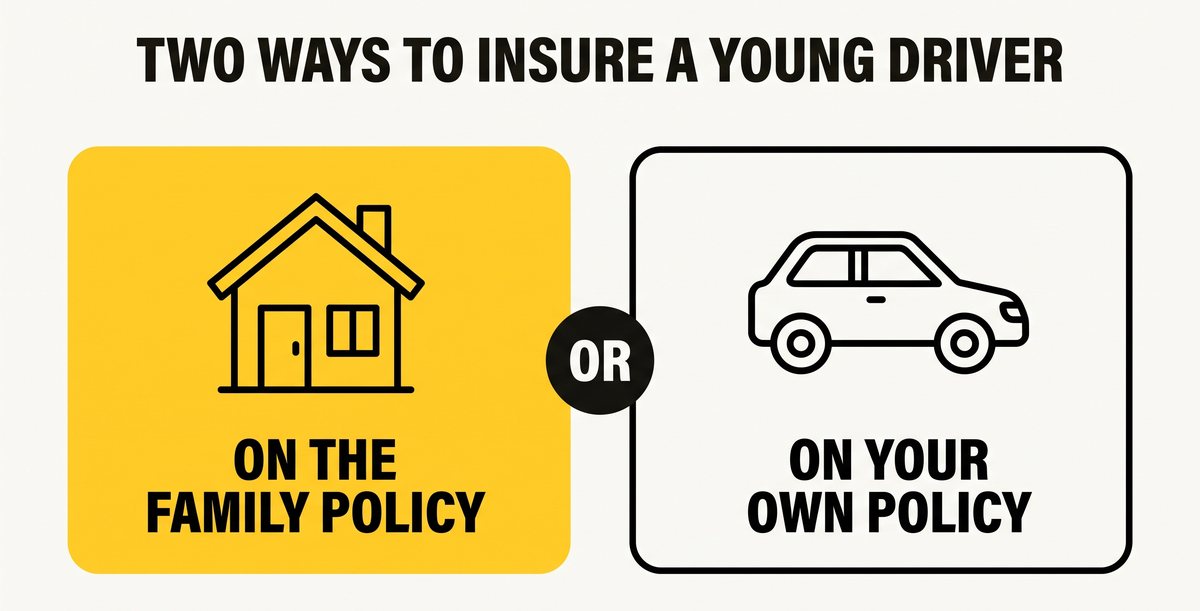
Living at home or away at school? Joining the household policy usually beats going solo. We'll run both numbers.
Let the carrier's app watch your driving for a few months. Smooth drivers earn discounts that stack.
An older paid-off car can skip collision coverage entirely — often the single biggest line on a young driver's bill.
Every clean year on your record moves you down the curve — 18 to 21 is the steep part, and most carriers give a real drop at 25. Until then, you're stuck with the math. What you're not stuck with is any particular company's version of it.
Some carriers quietly compete for young drivers; others price them away on purpose. From outside, you can't tell which is which — the logos all look the same. An independent agent can see all of them at once, stack every discount you qualify for, and put you with the carrier that wants your business.
Free · multiple carriers · Every discount checked
Statistics, not personal judgment. Drivers under 25 file more claims per mile than any other group, so carriers price the whole age bracket higher. Each clean year moves you down; 25 is where most carriers give the big drop.
If you live at home or you're away at school, usually yes — household policies with multi-car discounts typically beat solo policies. Once you move out for good or title a car in your own name, you'll generally need your own. We'll price both so you're deciding with real numbers.
For smooth drivers, yes — telematics discounts are real and they stack with good-student and other discounts. If you brake like a crash-test dummy, maybe skip it.